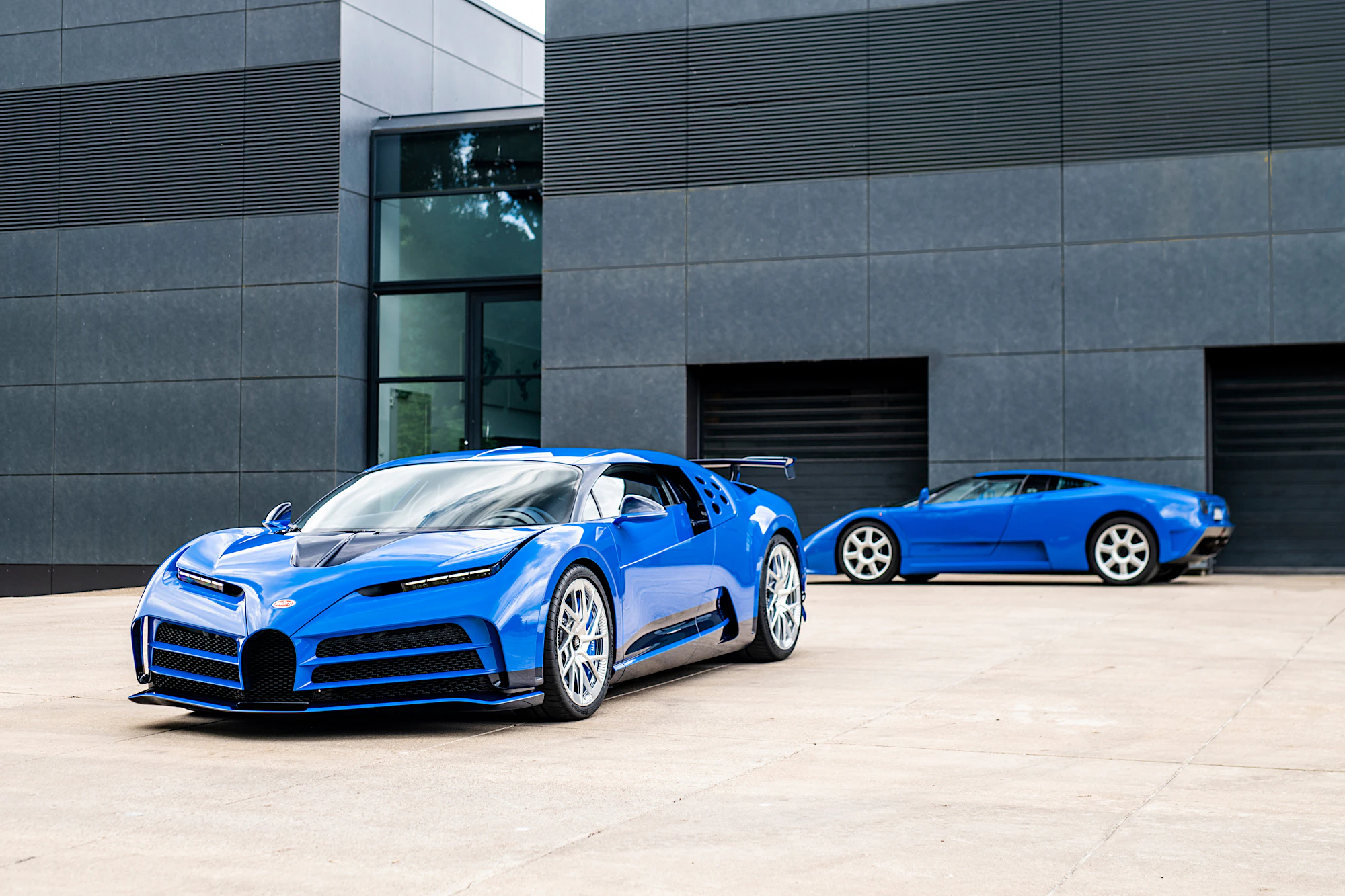
CENTODIECI — Bugatti Centodieci

REMINISCENCE OF AN ICON · Ten limited-edition tributes to the EB 110 · Molsheim 2019–2022
Centodieci — Italian for 110. The number points at two things at once:
110 years since the birth of Ettore Bugatti, and the supercar of 1991, the EB 110.
On 15 September 1991 Artioli unveiled the EB 110 on what would have been Ettore Bugatti's 110th birthday; in August 2019, at The Quail in Monterey, Bugatti named its tribute with the same Italian number. All ten cars were spoken for before the reveal, at eight million euros per car. On 19 December 2022 the tenth left Molsheim.
“We're celebrating a reinterpretation of this extraordinary vehicle with the Centodieci – Italian for 110.”
The Original · Blue FactoryCampogalliano 1987–1995
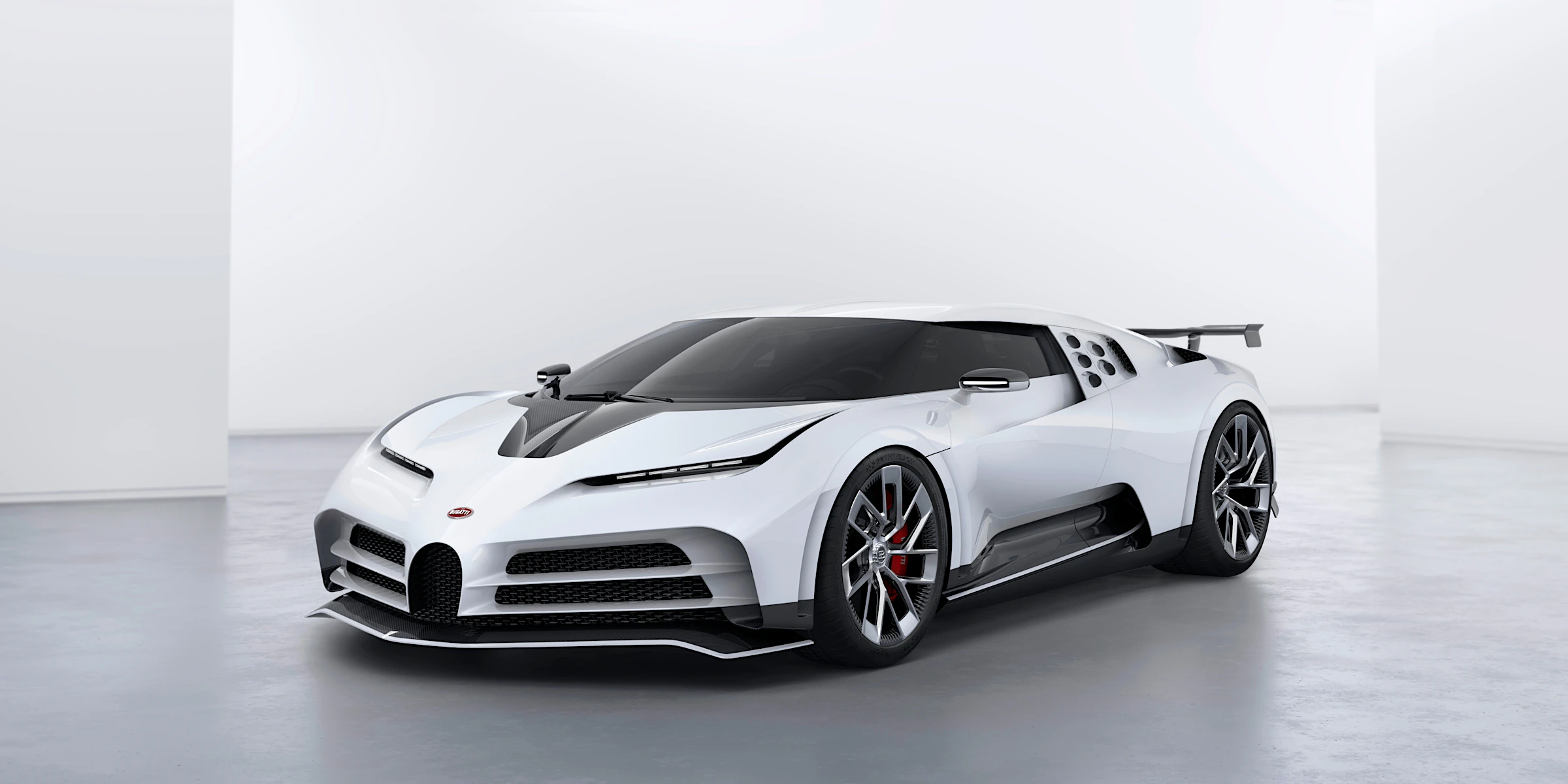
Every line of the Centodieci has its source in the car it honours: in 1987 Artioli bought the Bugatti rights and built the Blue Factory at Campogalliano; the EB 110 left those halls from 1991 until the plant closed in 1995 — 128 cars.
Romano Artioli acquired the rights to the Bugatti name in 1987 and chose Campogalliano, a small town in Emilia-Romagna — in the 1990s it sat among Italy's sports car works, which made recruiting experienced engineers and technicians straightforward. The Blue Factory, drawn by architect Giampaolo Benedini, opened on 15 September 1990 — Ettore Bugatti's 109th birthday.
One year later, on the same date, the EB 110 was unveiled: a 3.5-litre V12 with four turbochargers, all-wheel drive and a carbon monocoque, 610 PS, 351 km/h — a world record for a production car. Between 1991 and 1995 the line built only 128 cars: 96 GTs and 32 Super Sports. The market shrank and the factory closed; the monocoque, the four-turbo V12 and the Poltrona Frau leather interior all continued later in another form, at Molsheim.
DRAG →
Translation · FormForm Follows Performance
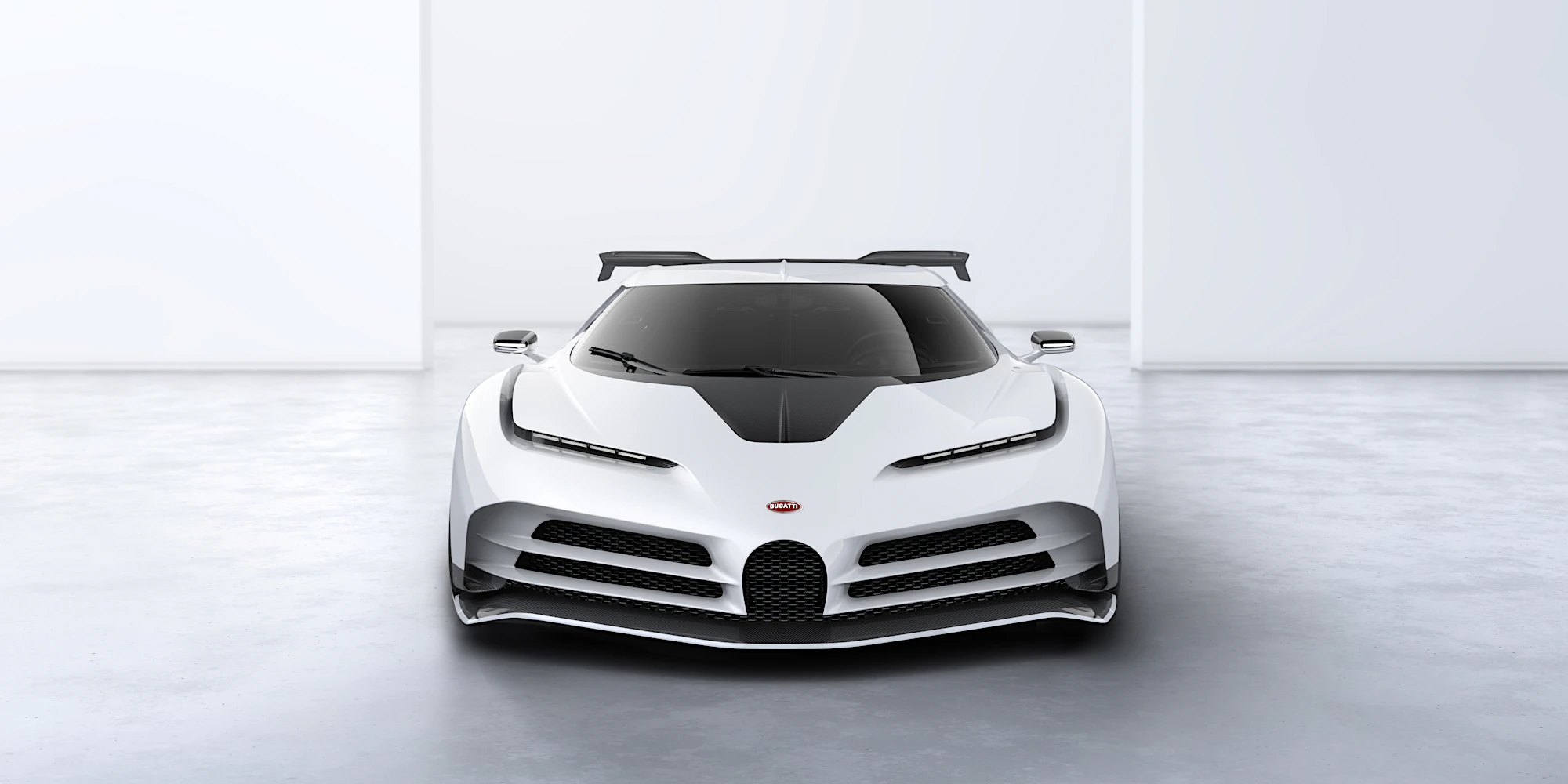
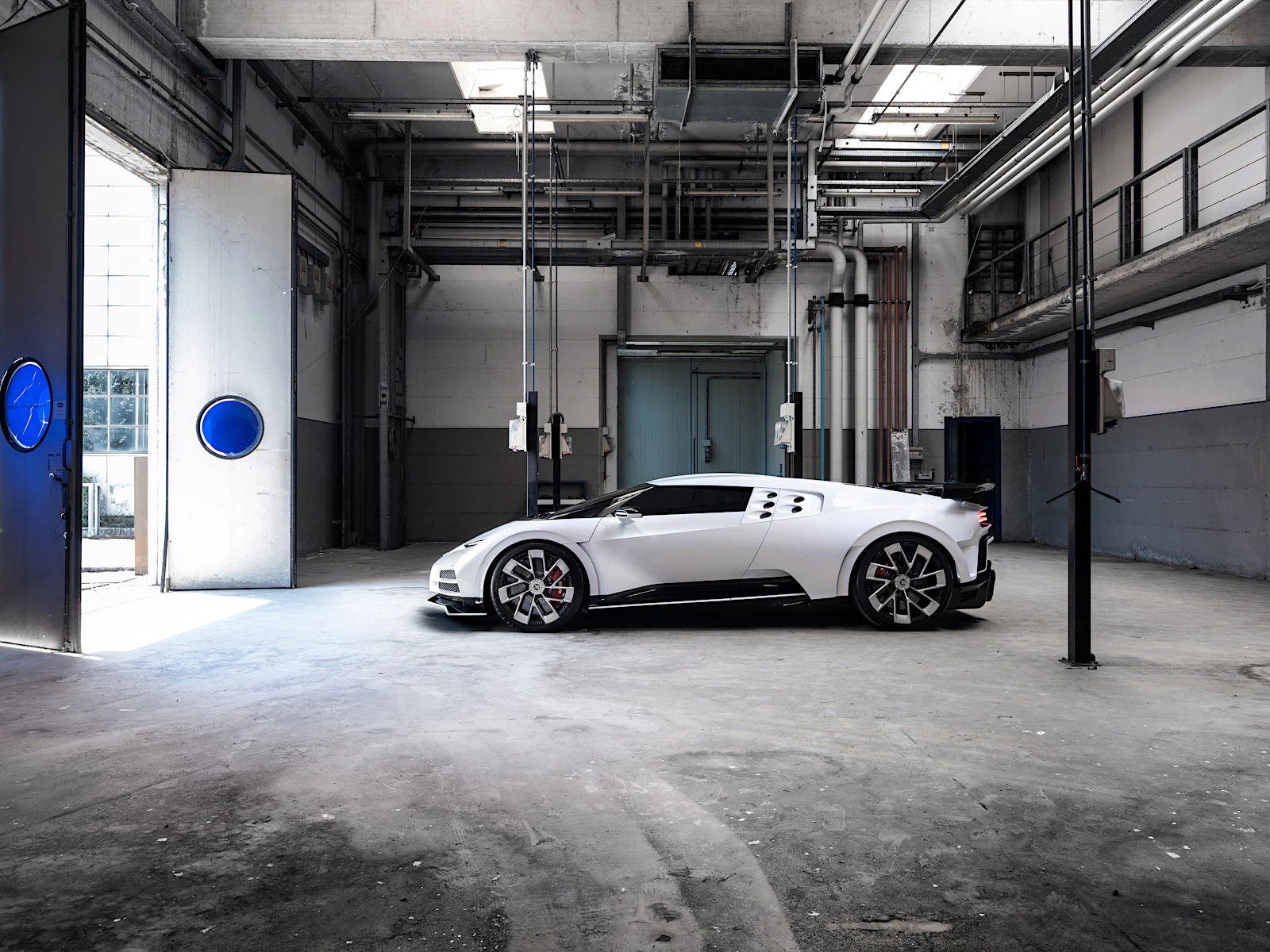
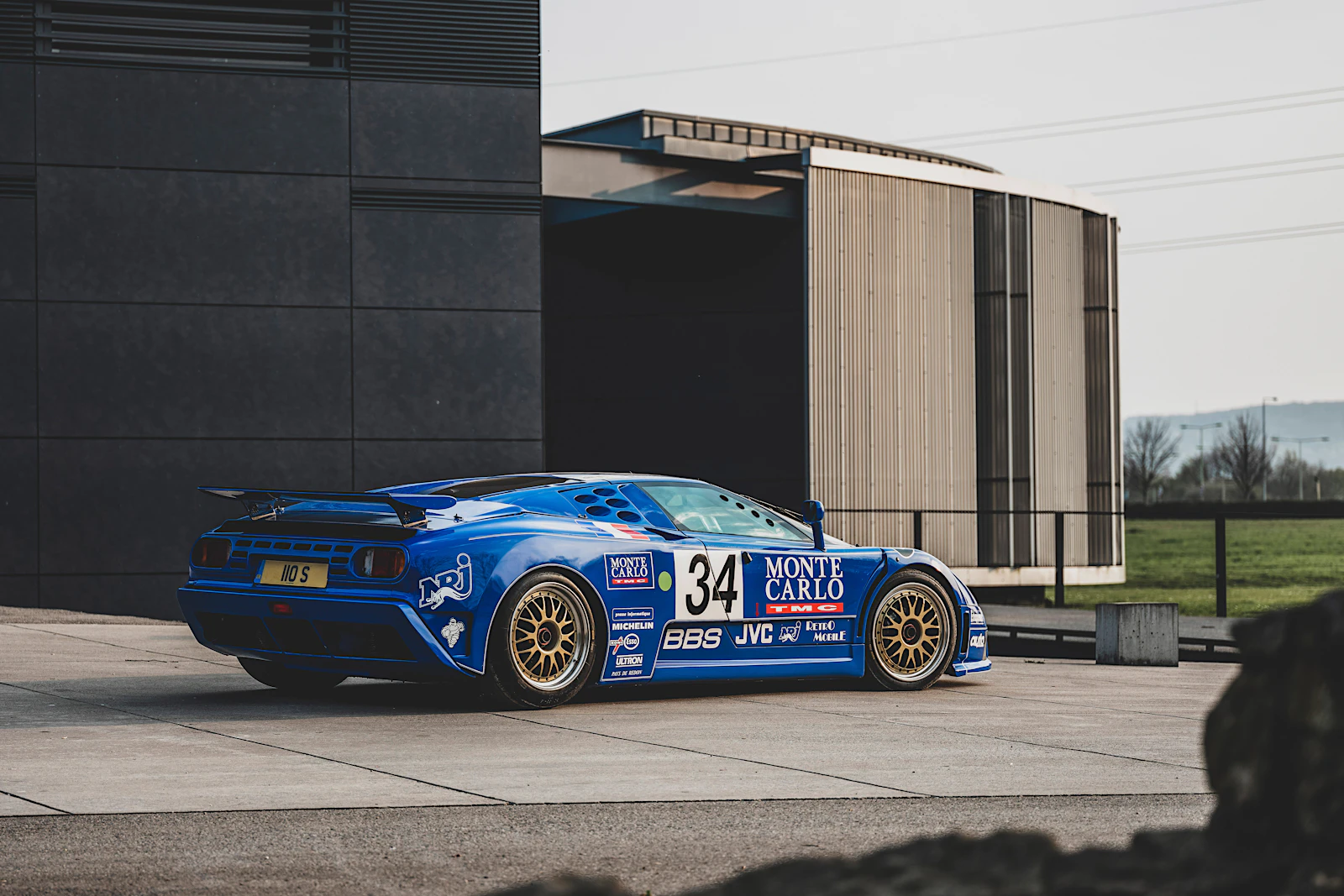
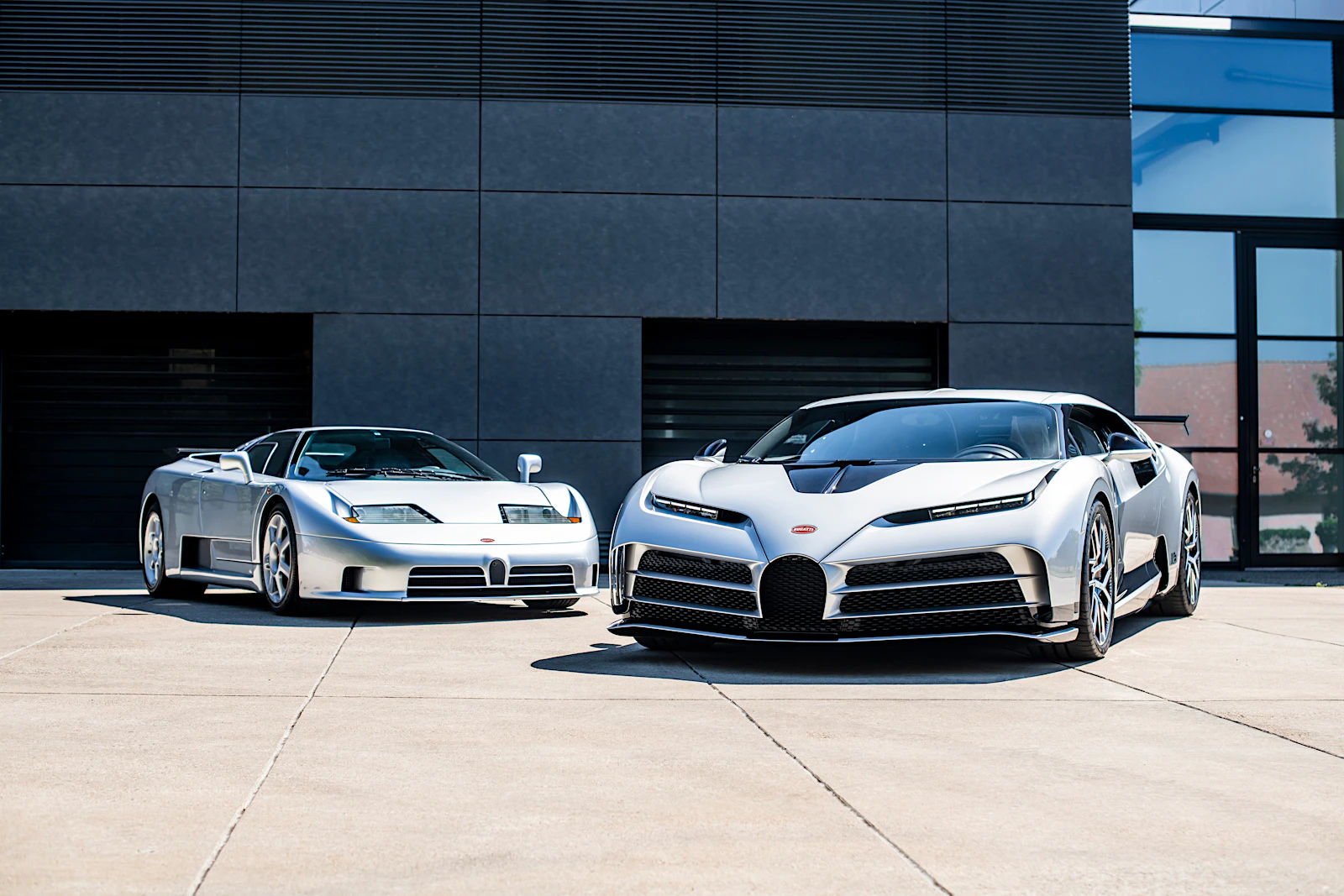
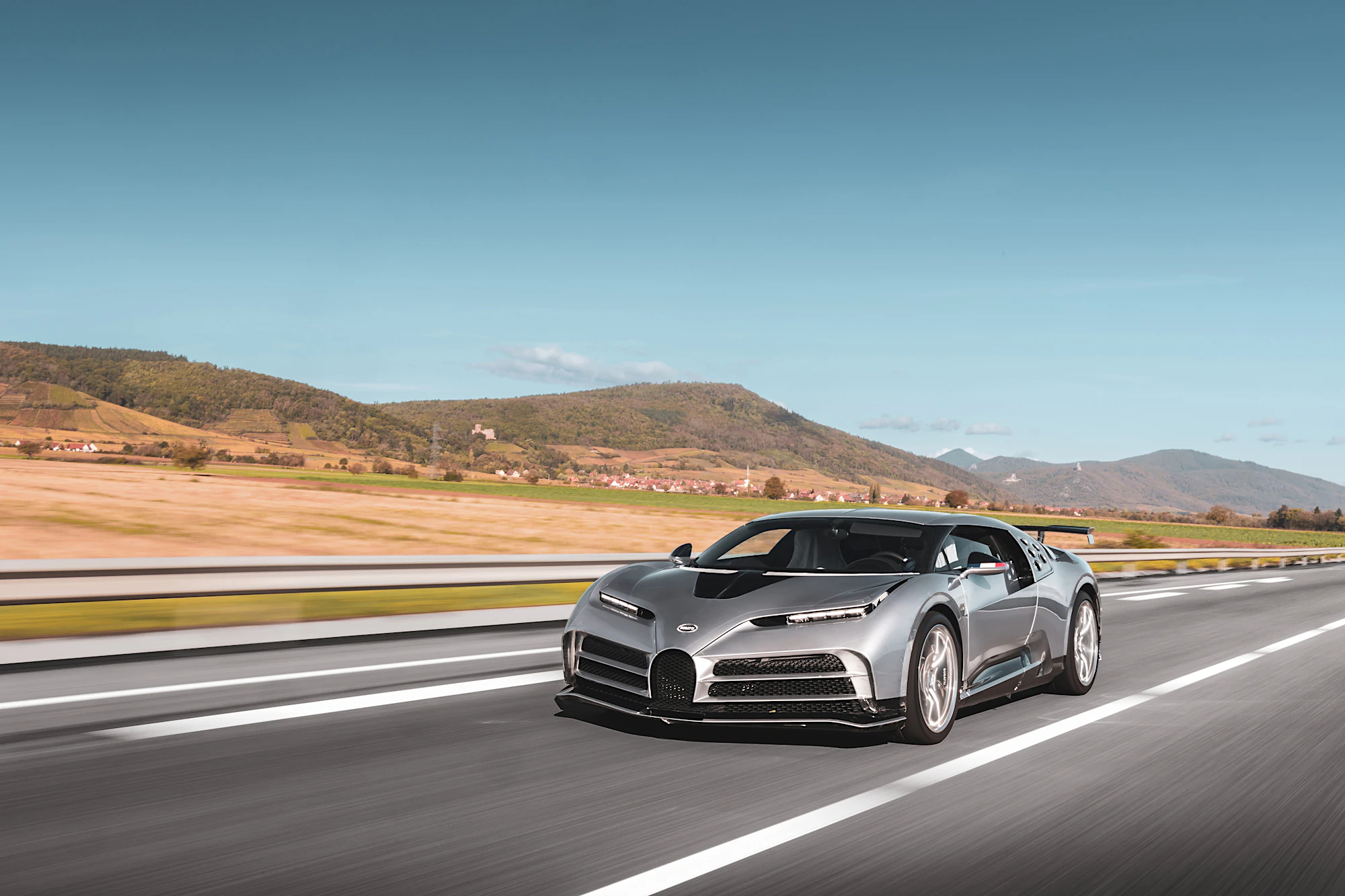
Design Director Achim Anscheidt set the brief: don't let the historic car take over — translate the shape and technology of that era into a modern interpretation. Start with the two profiles, then compare front, intake and tail, item by item.
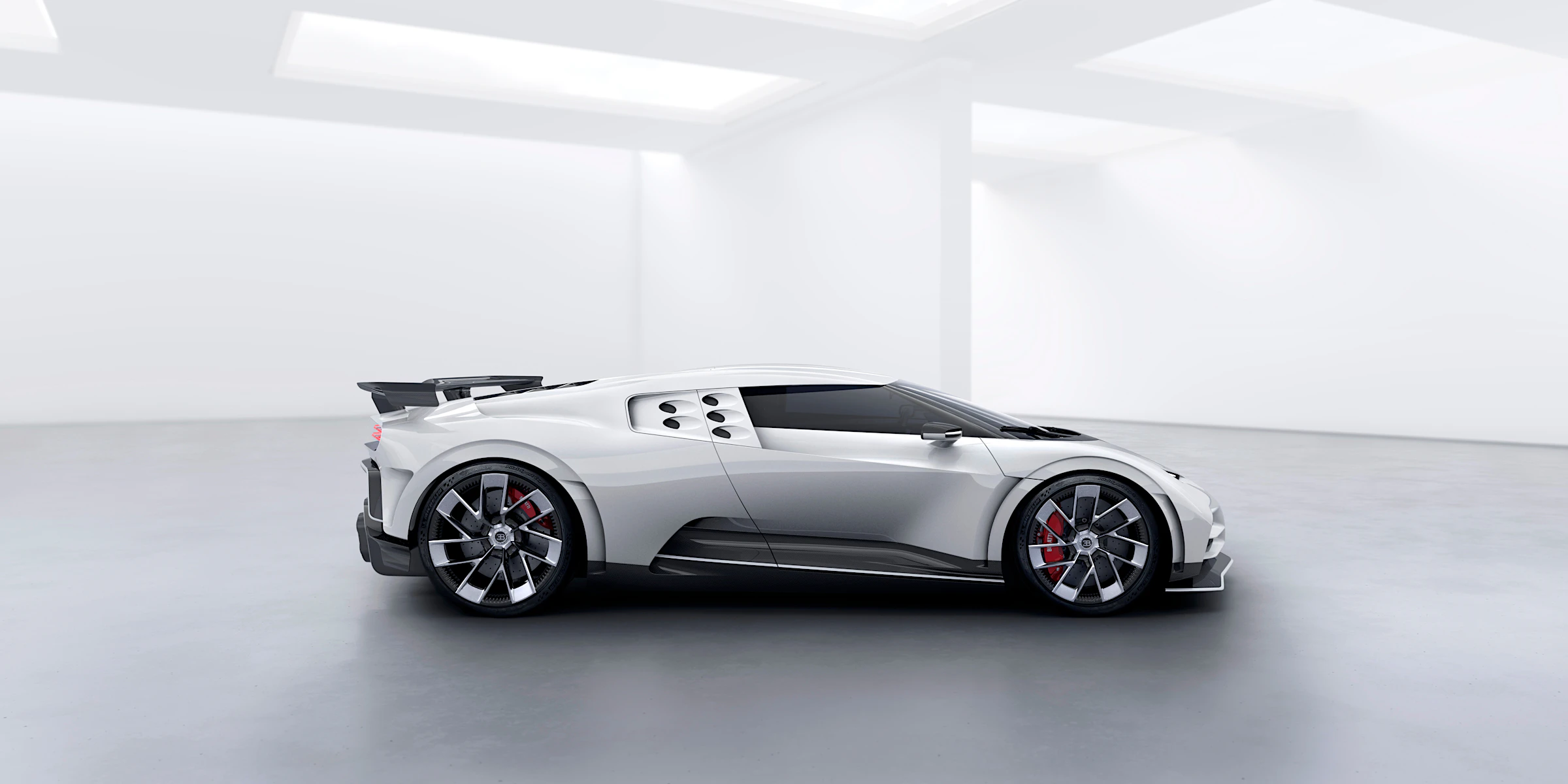
- 2019Lifted profile, poised to leap at rest
- 1991Flat wedge
- 2019Slimline LEDs, developed for this car
- 1991Slab headlights
- 2019Five ports at the apex of the C-line
- 1991Five B-pillar cooling holes
- 2019Ten rear slots, stacked quad exhausts
- 1991Capsule tail lights, quad pipes
The EB 110 is flat and wedge-shaped; Centodieci lifts it. The five B-pillar cooling holes move up to the apex of a new C-line and become five round air inserts. Slab headlights become slimline LEDs developed for this car alone; the horseshoe grille shrinks, while ten rear slots and stacked tailpipes keep their relationship to the EB 110 Supersport. The stance is not decoration — it has to answer the aerodynamic and thermal demands of a sixteen-cylinder engine with 1,600 PS.
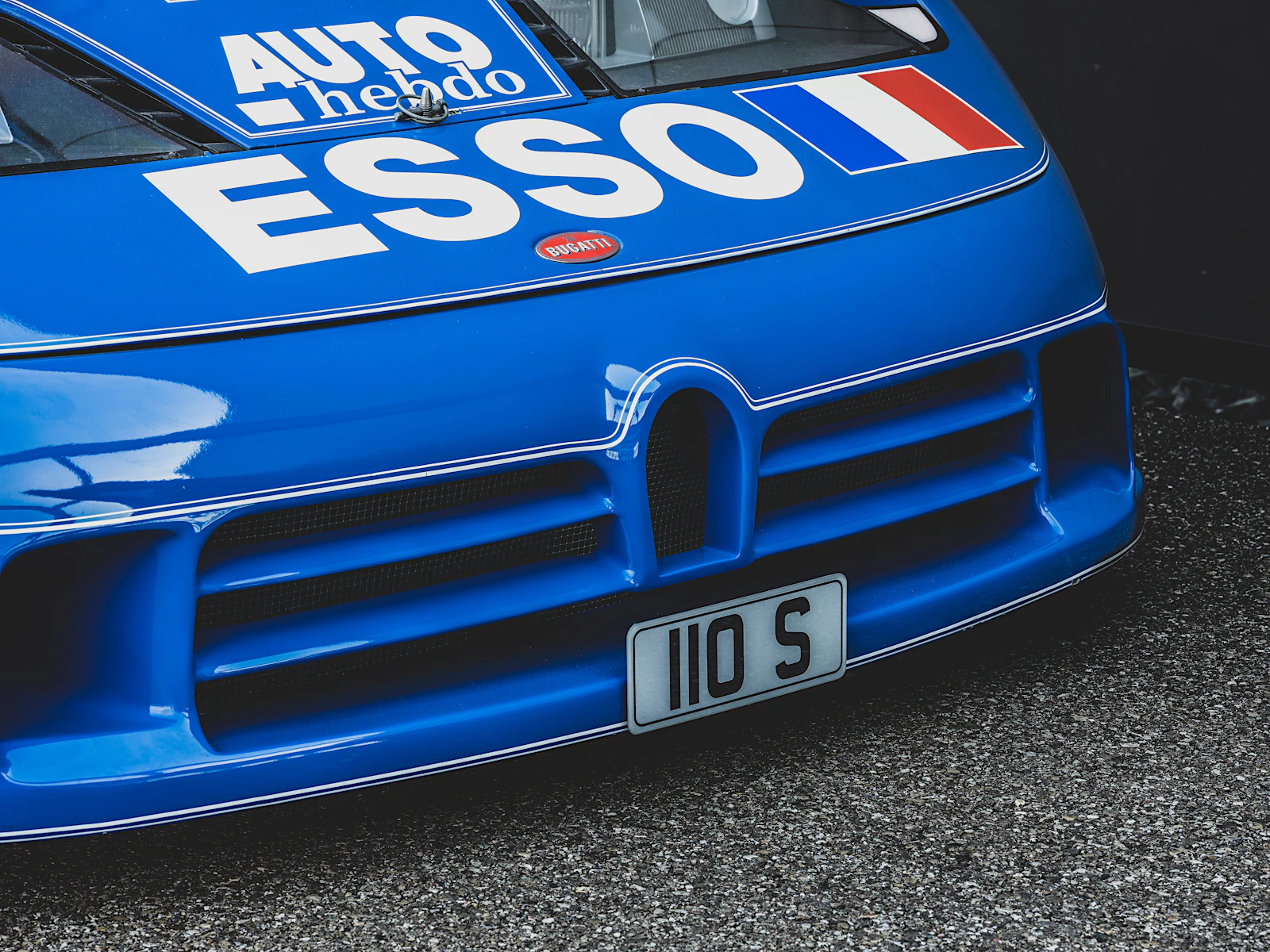 EB 110 · 1991
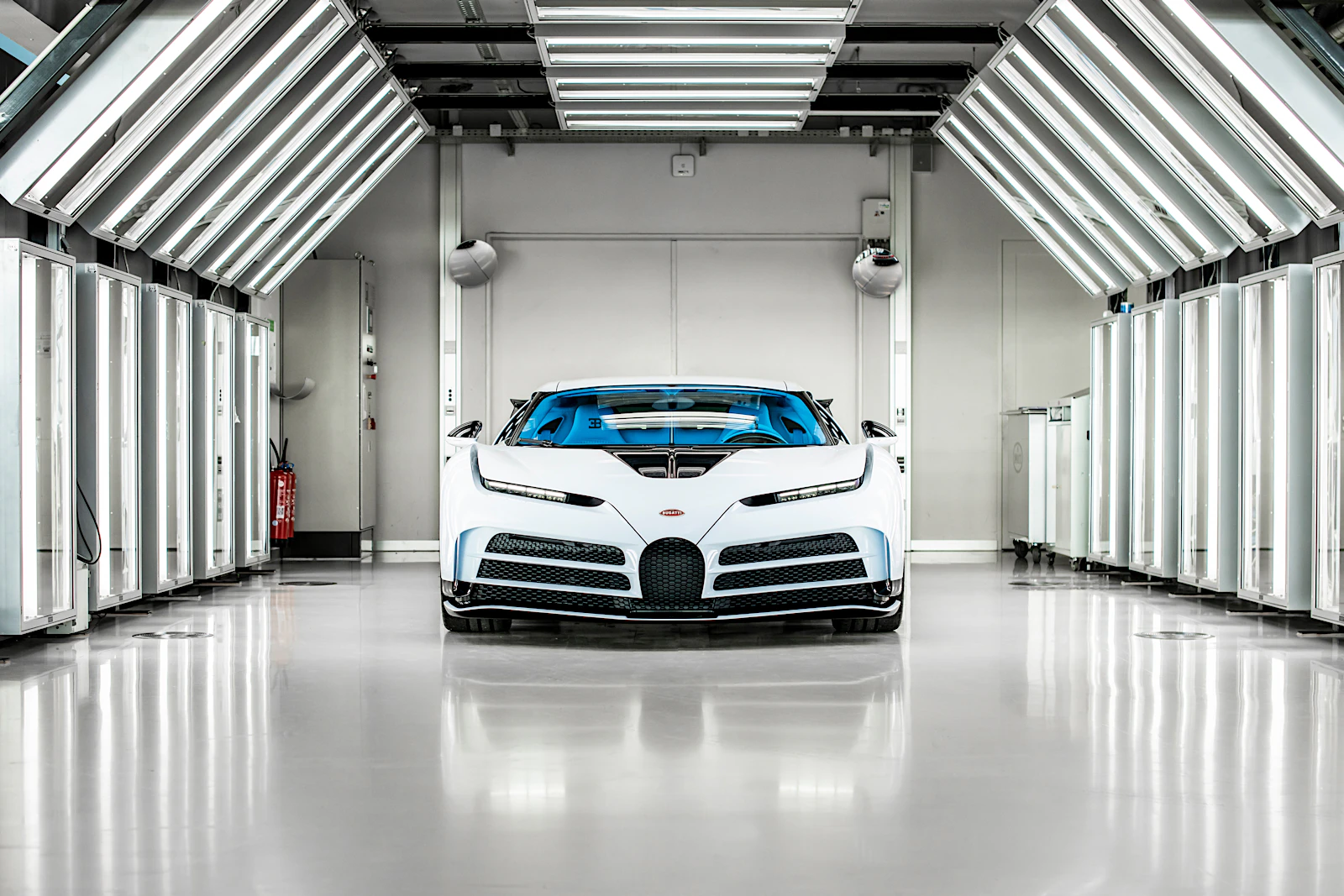 CENTODIECI · 2019
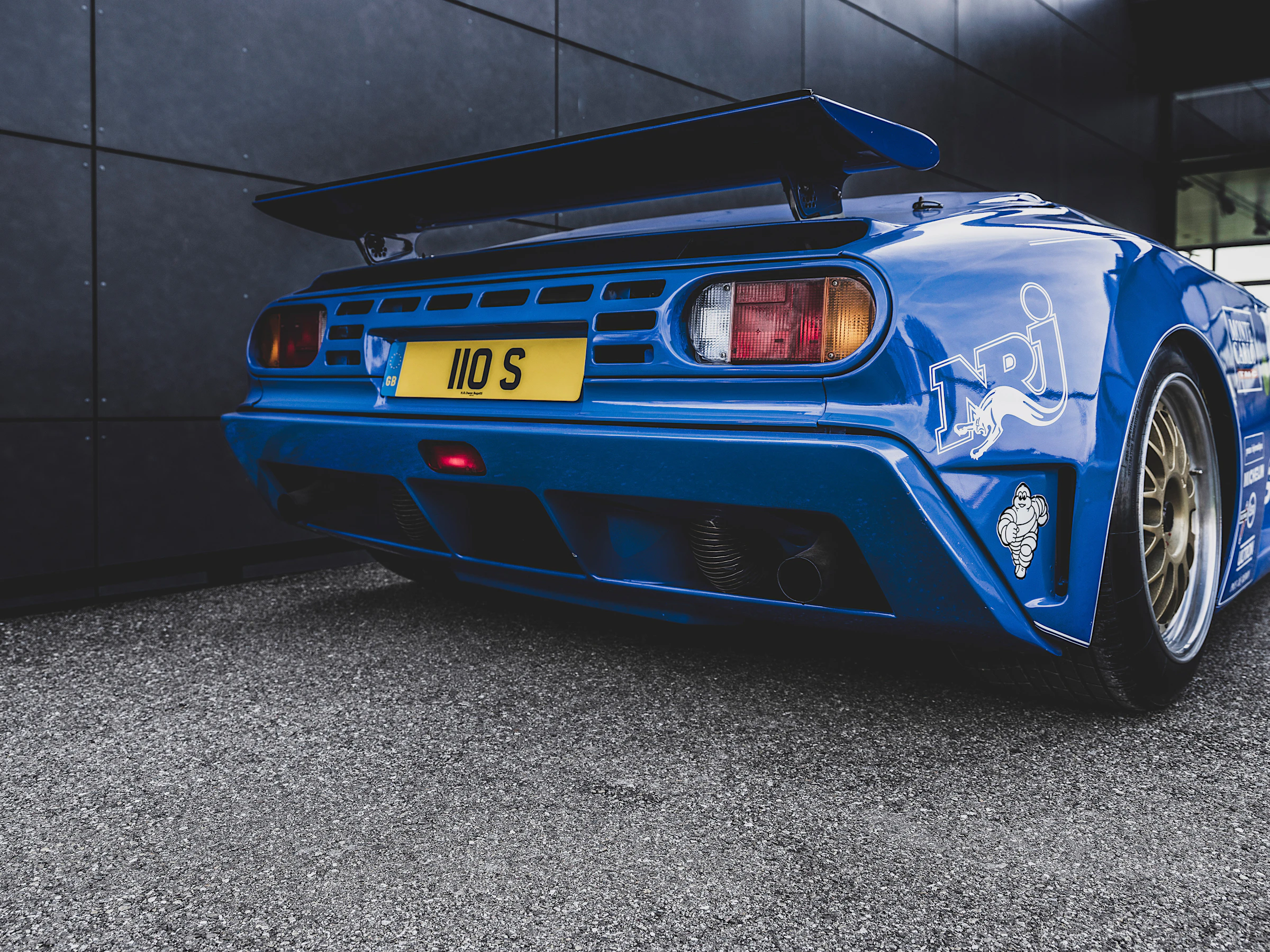 EB 110 · 1991
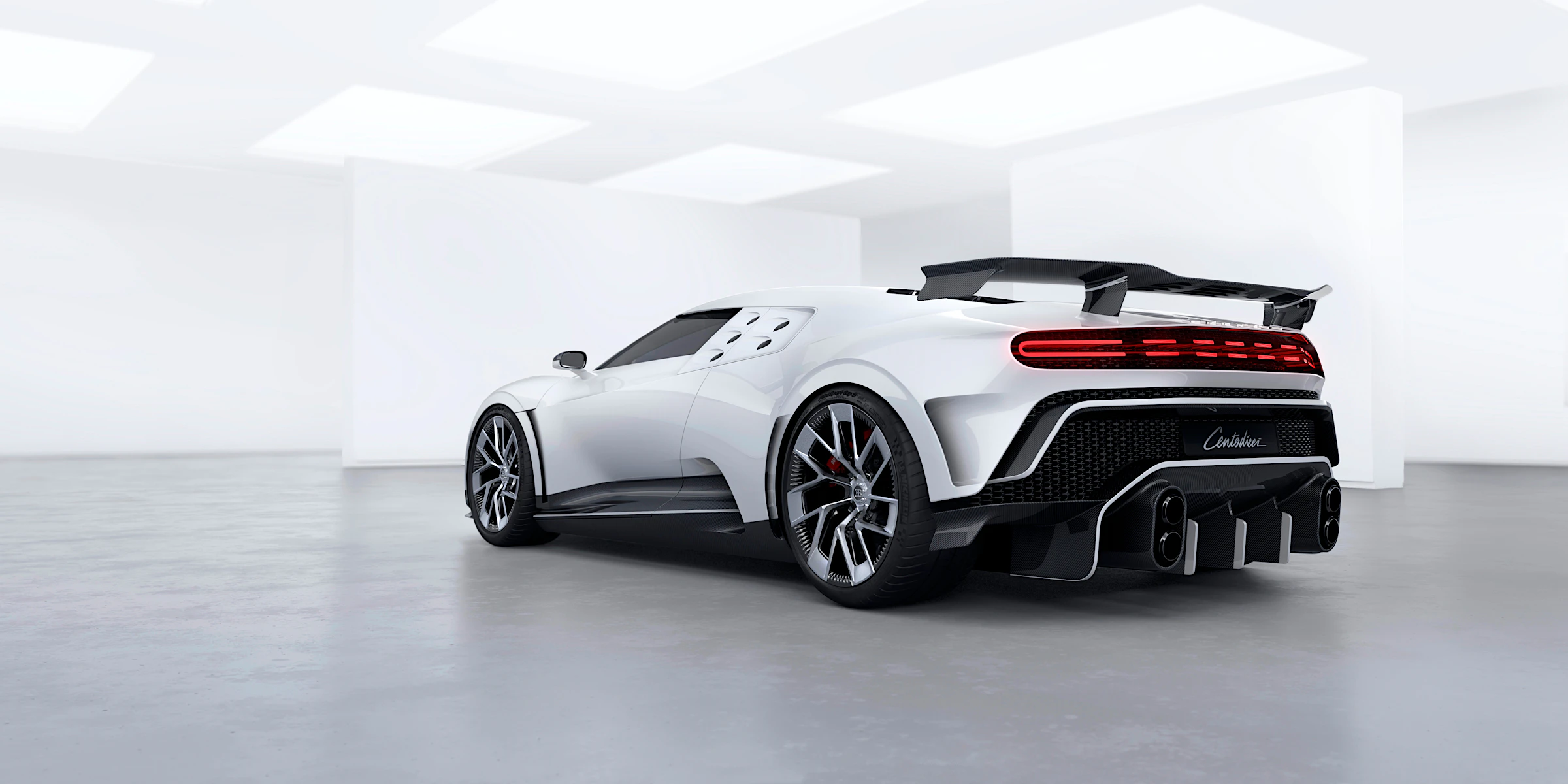 CENTODIECI · 2019
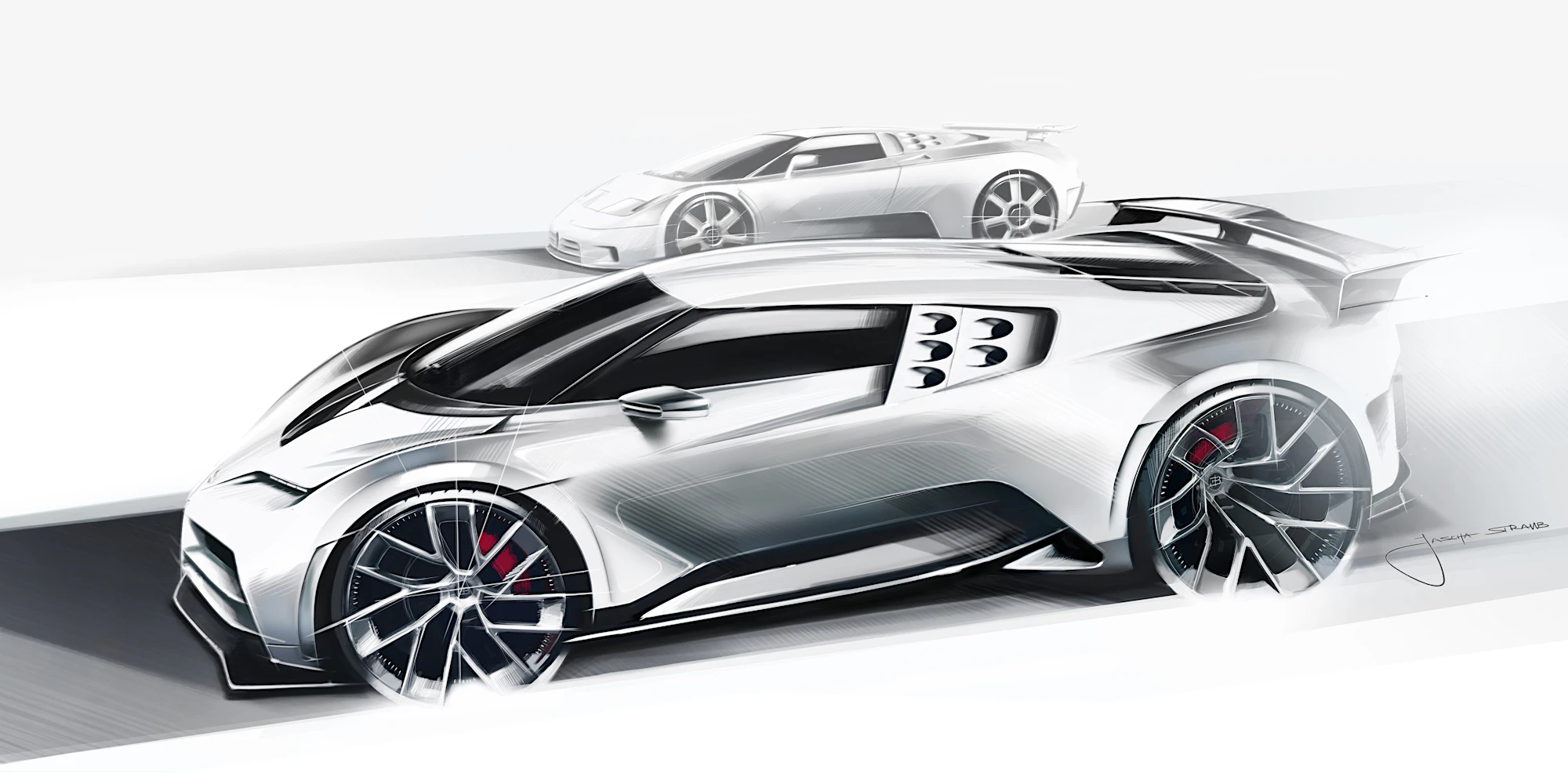
Inside · SymmetrySeamless Symmetry
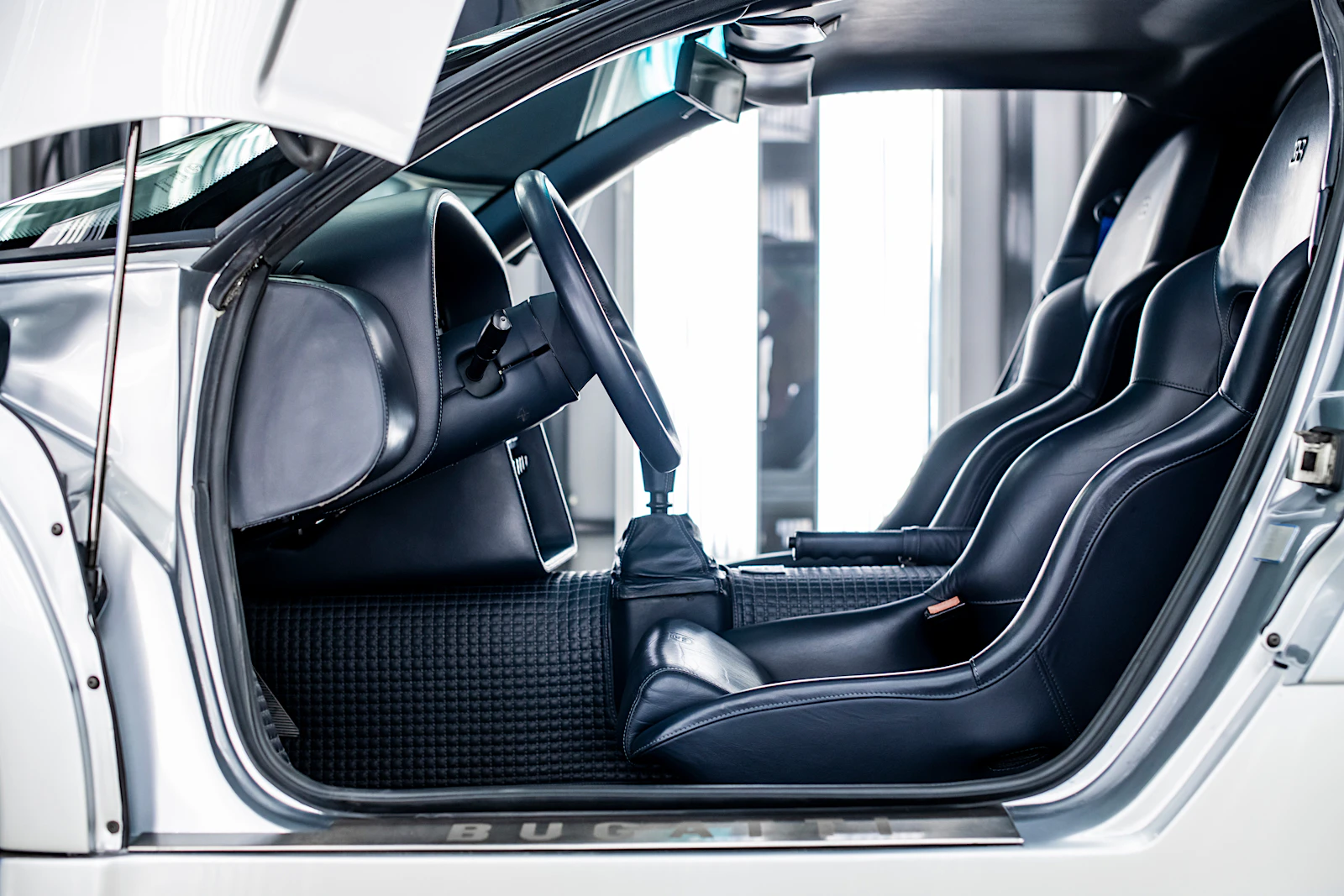
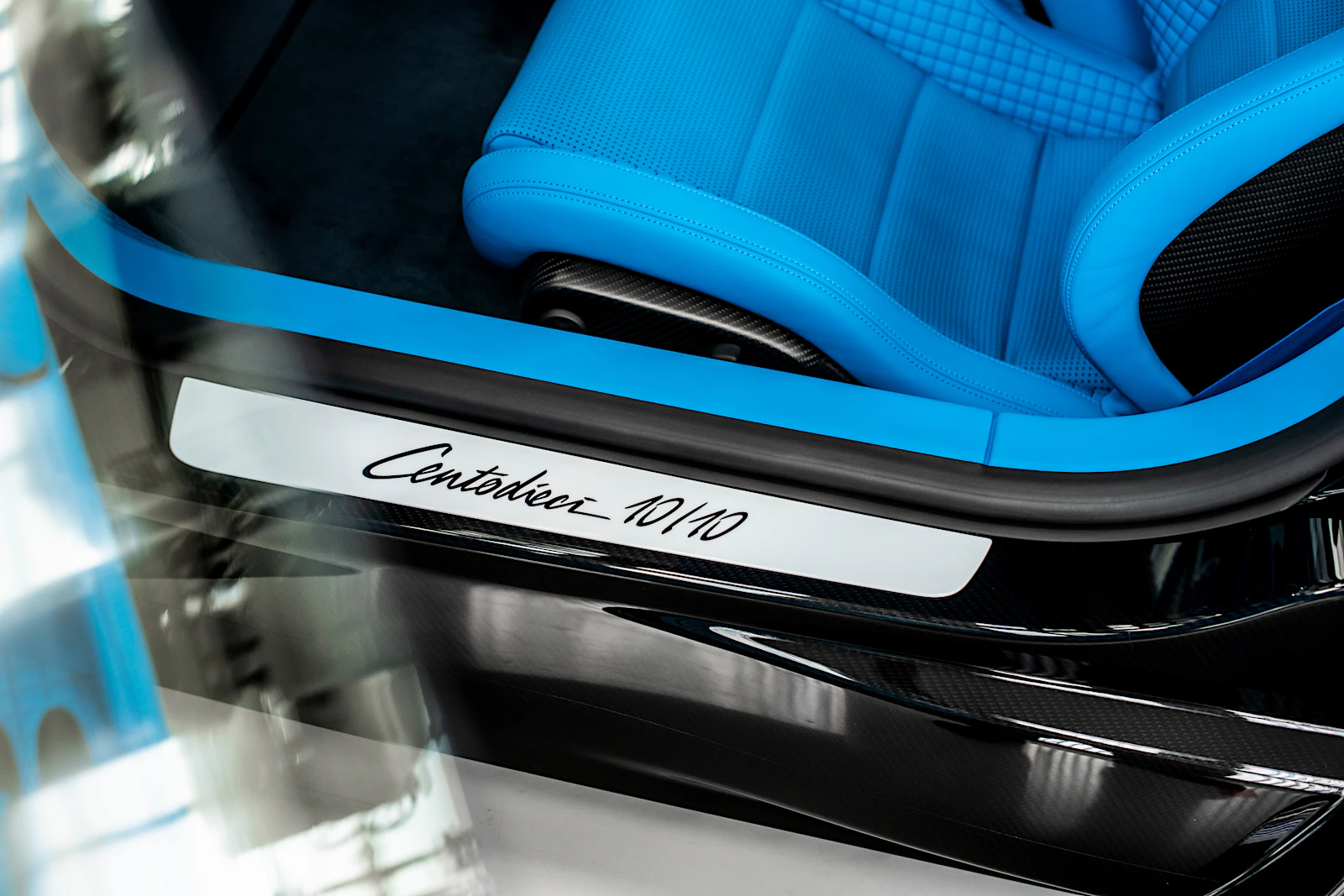
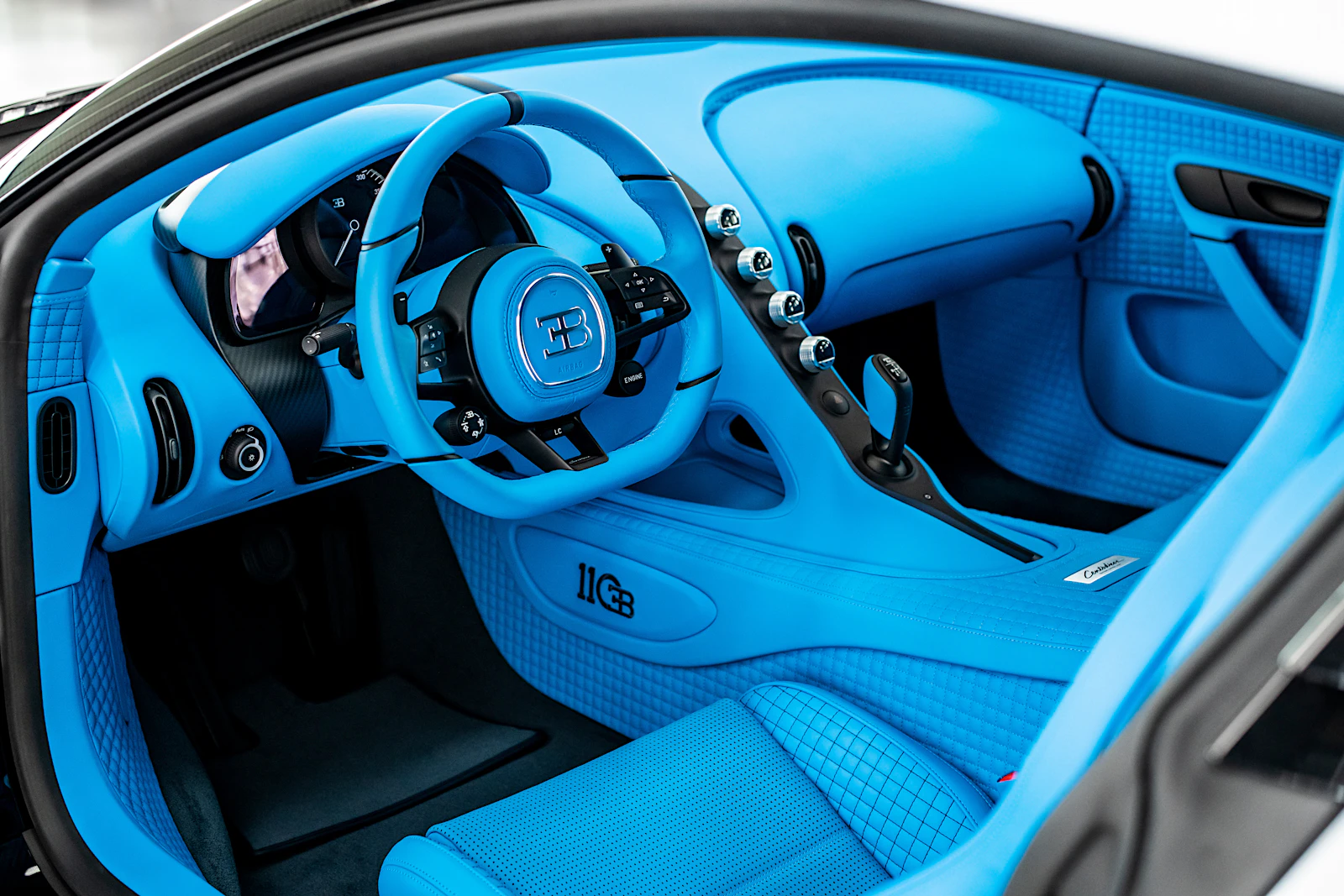
With the outside translated, it is time for the inside: door panels, instrument panel and centre tunnel redone in the style of the 1990s, the quilted pattern taken from the EB 110 Super Sport.
Head of Color & Trim Jörg Grumer says the sample for the quilting and perforation was the EB 110 Super Sport — high-quality leather, carbon and aluminium carry the top-of-range styling of that car into the 21st century. Shapes, parts and processes were developed virtually from scratch, refined over just under a year. Interior development engineer Dirk Buhre says the new seat feels “different, and yet familiar.”
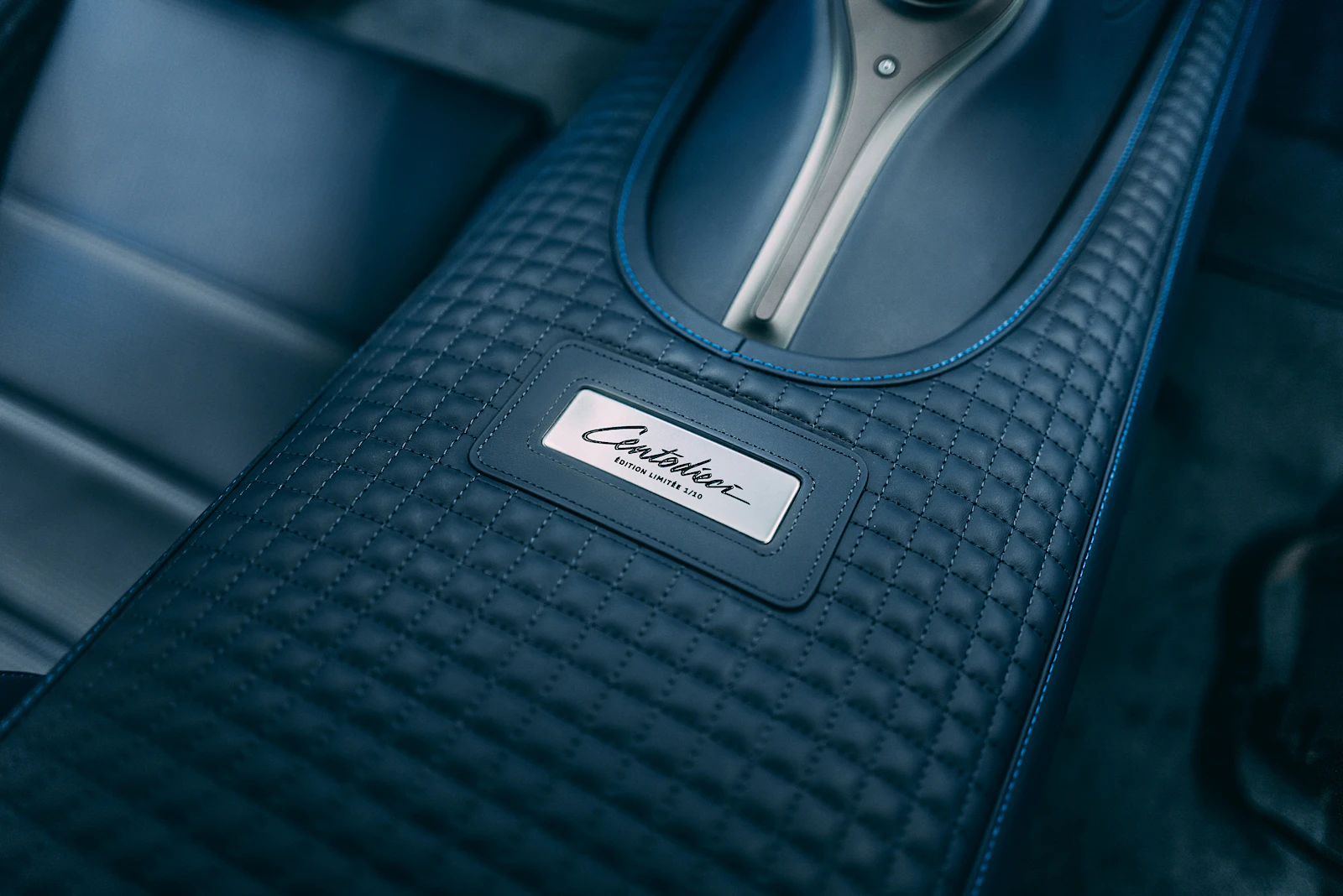
10QUILTED CHESSBOARD
The square array holds its alignment even on curves
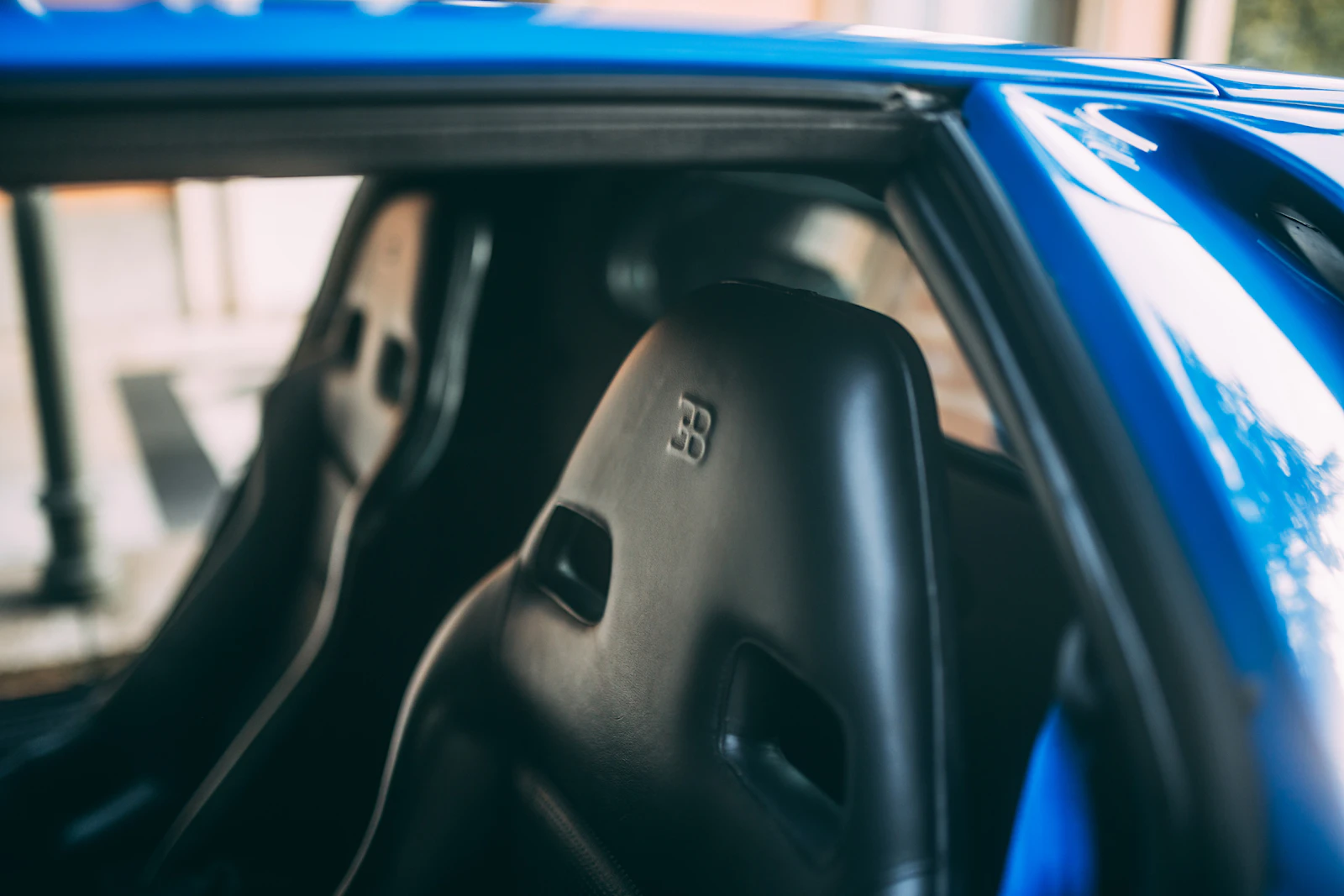
Seats, roof liner, door panels, centre console and floor mats run one quadrate array — sampled from the seats of the EB 110 Super Sport, right down to the rhythm of the perforation.
four days just for headrest embossing
and leather, then a day to check seats
Power · Tour de ForceW16 · 1,600 PS
Shape and interior settled — next, what makes it move: an 8.0-litre W16 with four turbochargers, a 7-speed dual-clutch, permanent all-wheel drive. The powertrain is shared with the Chiron Super Sport, the chassis tuned anew.
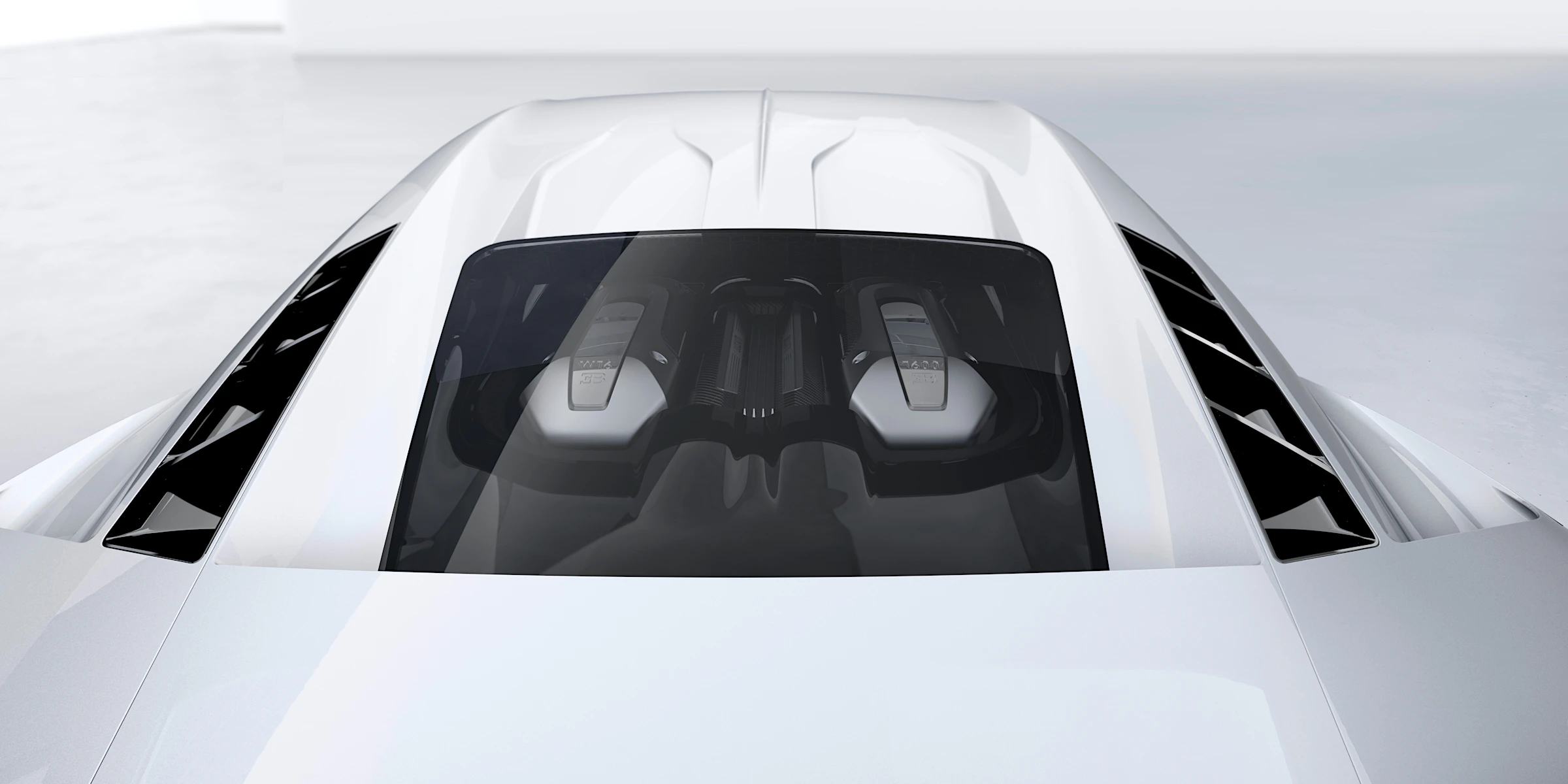
0–100 km/h in 2.4 seconds, 0–200 in 6.1, 0–300 in 13.1, top speed electronically limited to 380 km/h. The car is 20 kilograms lighter than a Chiron — a lightweight wiper and carbon stabilisers each take their share — at 1.13 kilograms per horsepower. The W16 sits under an EB 110-style glass cover, and the oil cooler gained an extra air inlet to keep this strengthened engine at temperature.
0–100 km/hAcceleration
Top Speed380 km/h
Peak Power1,177 kW · 7,050 rpm
Lateral AccelerationHandling mode
Proven · Heat & WindFour Gates
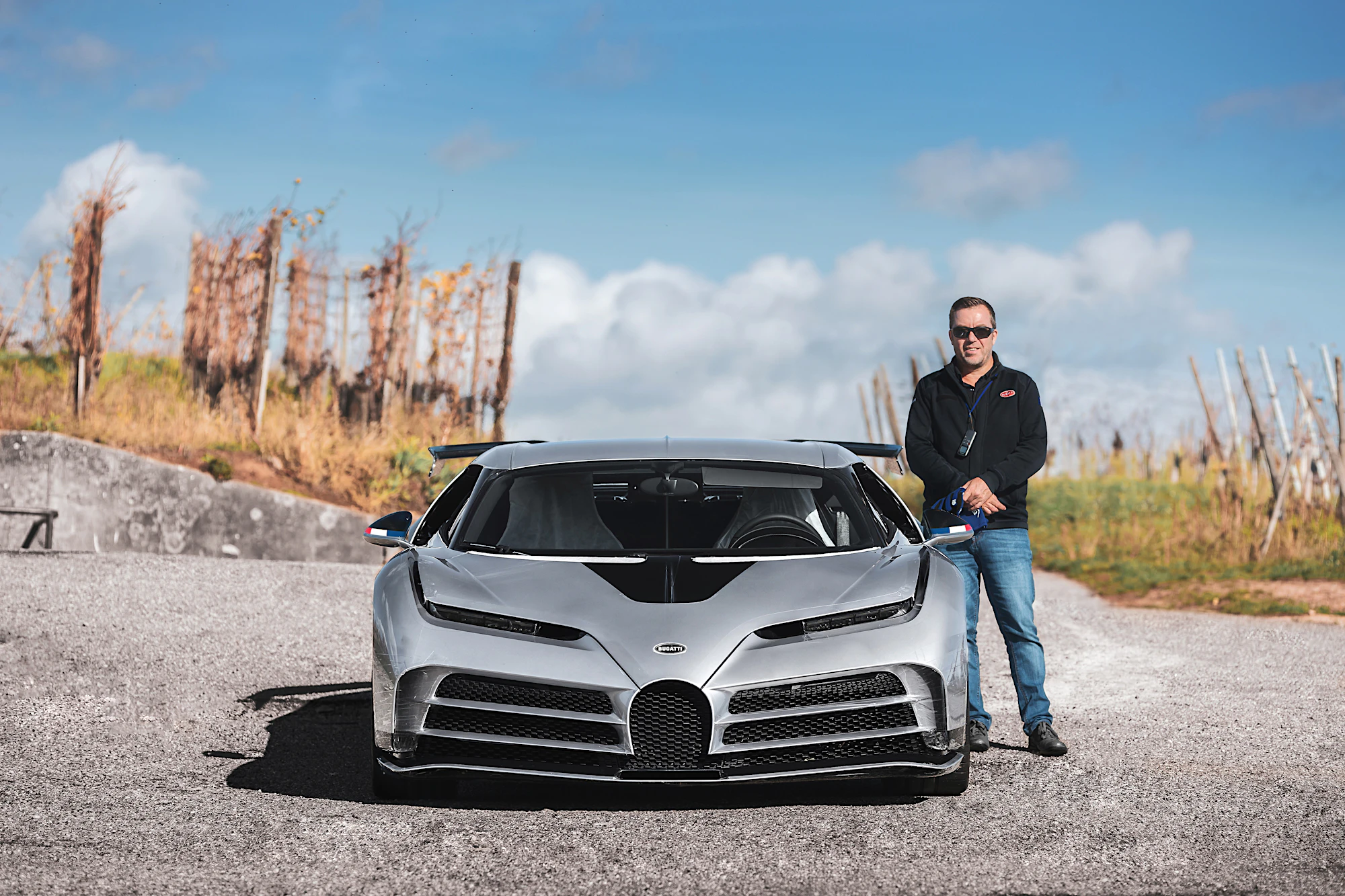
Figures on paper become deliverable cars through four gates: the chassis setup at Nardò, the wind tunnel, 45°C in Arizona, −20°C in the climate chamber — only ten cars, but not one step of the process was skipped.
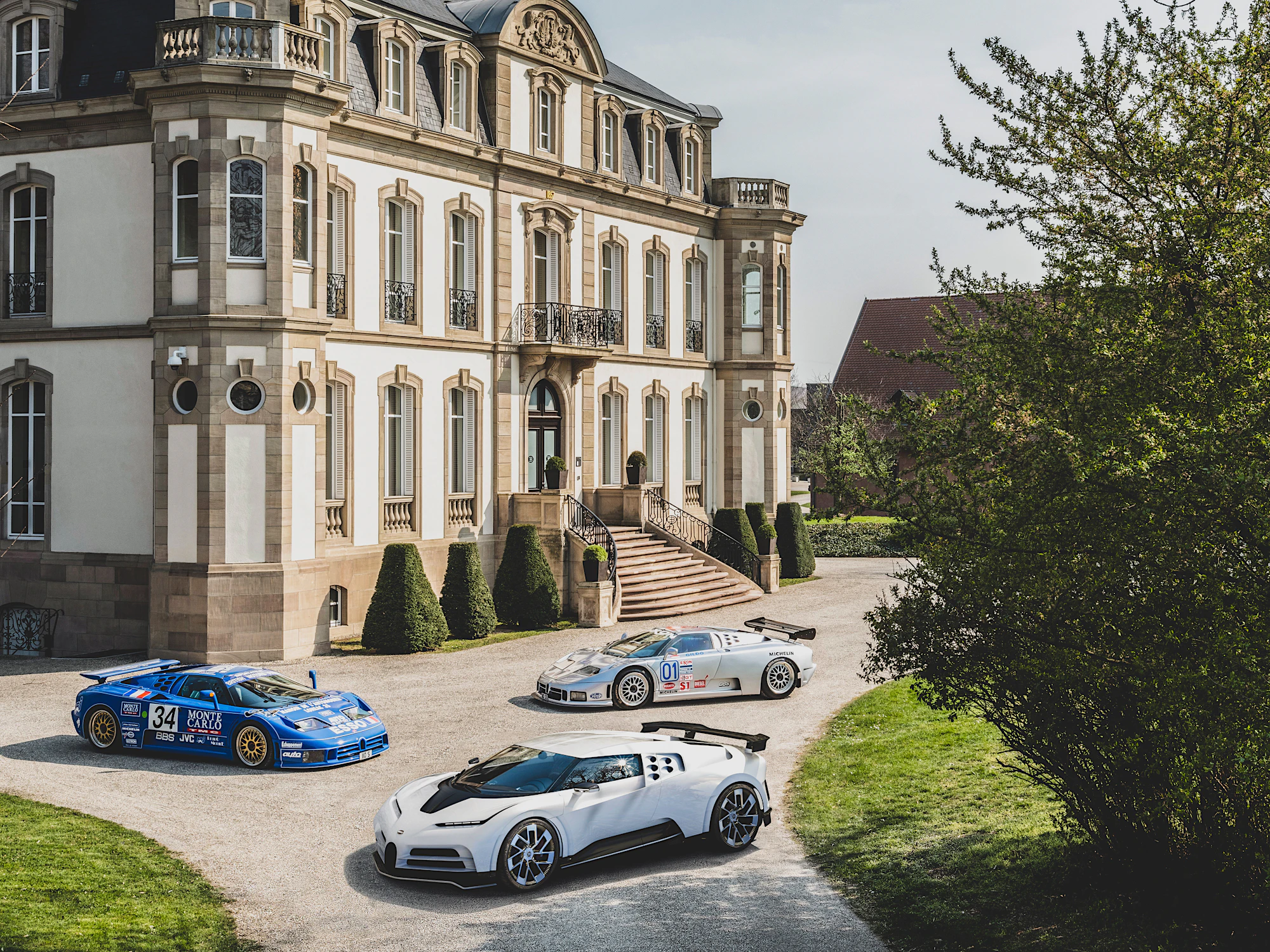
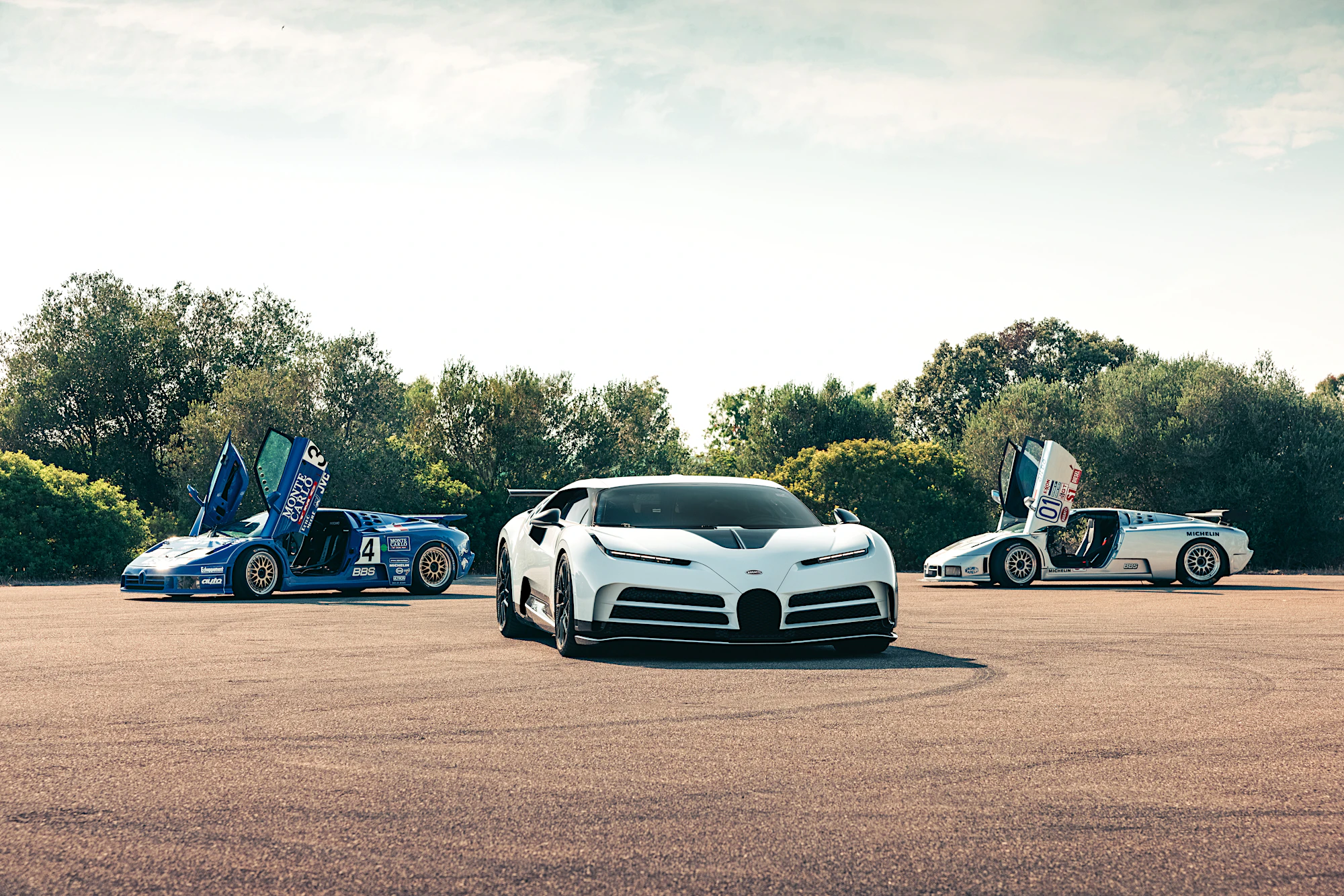
In July 2021, the final chassis setup before production took place at Nardò in Italy: a team of 20 spent two weeks on the 6.2-kilometre handling course, verifying every simulated value. The factory EB 110 LM and the Sport Competizione were shipped in as well, and Loris Bicocchi — the test driver who developed the original EB 110 from scratch — drove all three: “the moment the two EB 110 race cars came off the transporter, I instantly felt 30 years younger.”
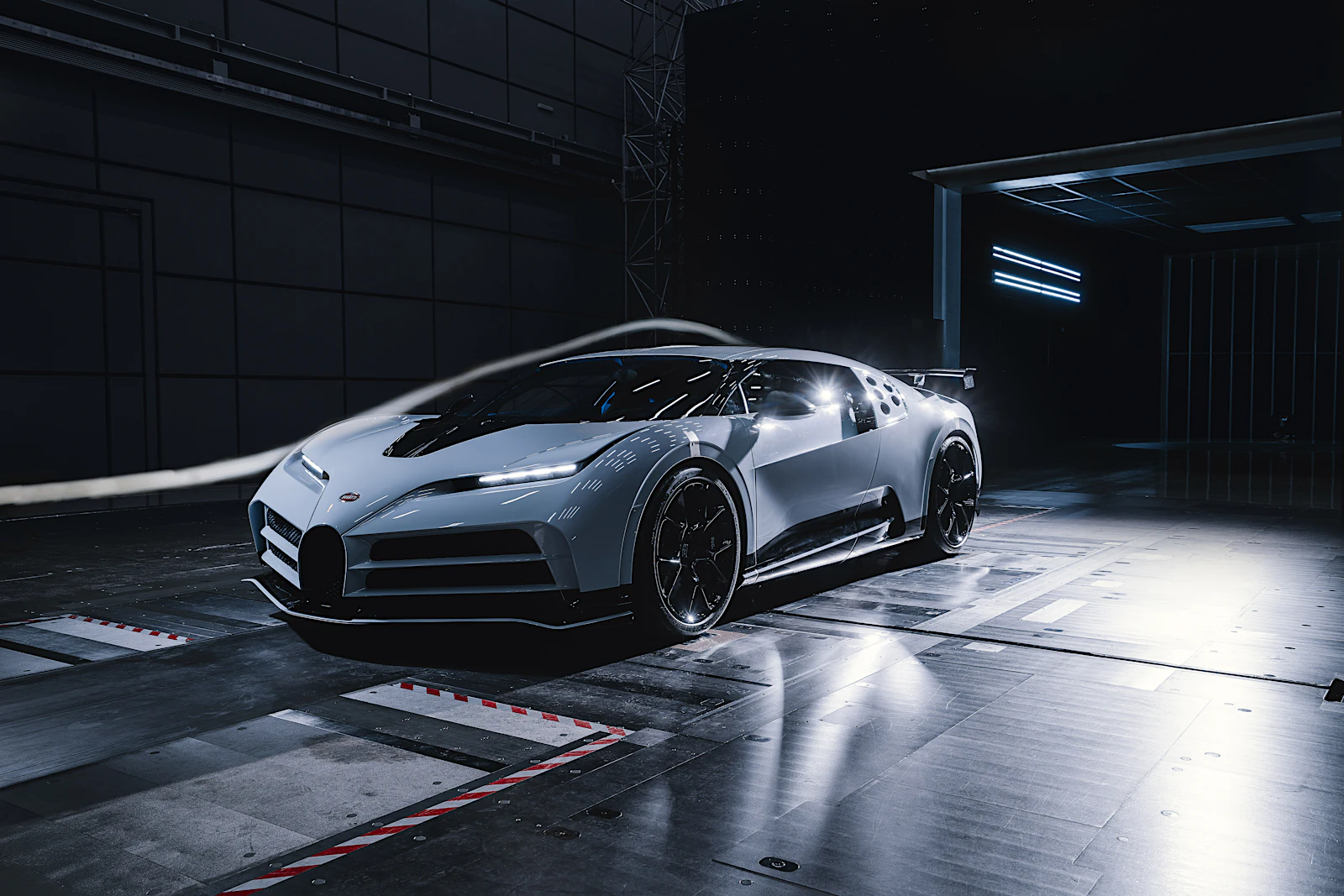
In the wind tunnel five belts run at once, simulating up to 300 km/h; the driveshafts are removed first, the body held by nothing but four small pins. A standard setup at 140 km/h gives the benchmark, and front and rear downforce have to be perfect — Technical Project Manager André Kullig says it makes no difference whether you develop a car for one, ten or five hundred. Then came 45°C hot-weather testing in Arizona (a 27-strong team driving 800 kilometres from the coast into the desert) and twelve hours at −20°C in the climate chamber.
The last gate is on the country roads around Molsheim: test driver Steve Jenny drives at least 300 kilometres — about five hours — over passes, the Route des Vins d'Alsace, cobbles and motorways. Every car has covered at least 350 kilometres by handover.
- 6.2km · Nardò handling course
- 300km/h · five-belt simulation
- 0.428CW · EB mode @140 km/h
- 45°CArizona hot weather test
- -20°CClimate chamber, 12 h
- 350km · pre-delivery total
Delivery · TenTen of Ten
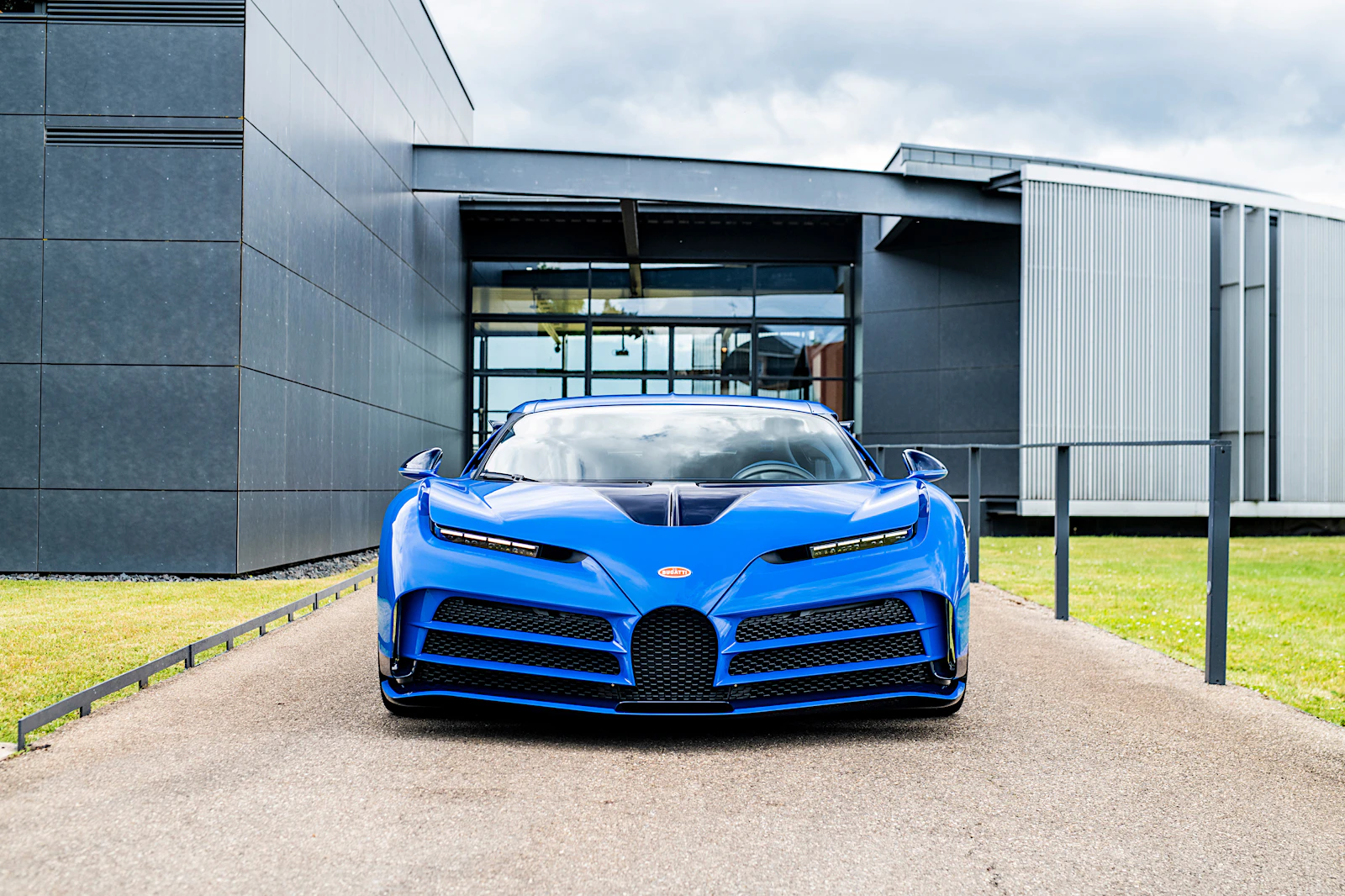
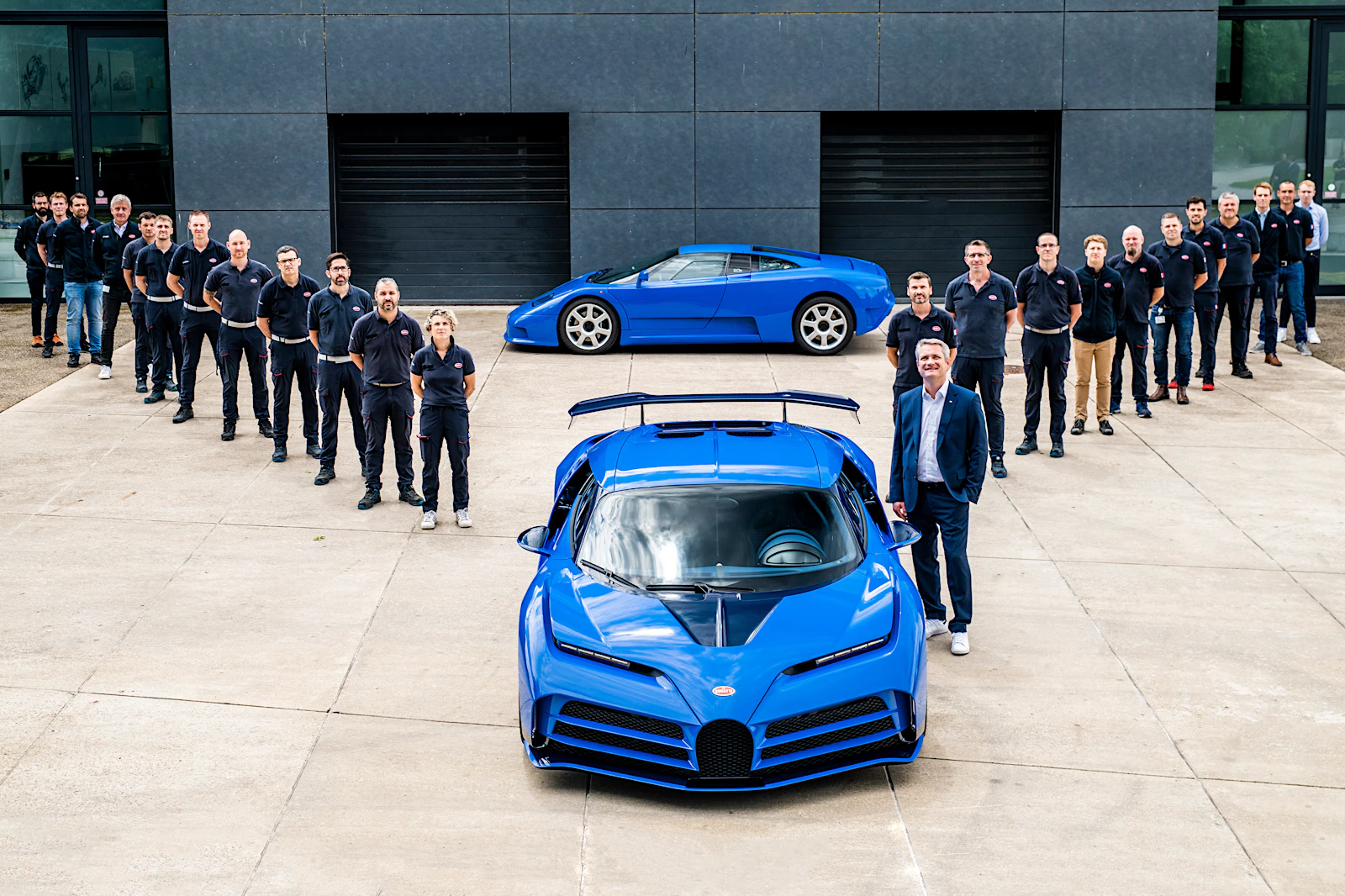
Four gates cleared, all that remains is handover: the first car left the atelier in June 2022, the tenth on 19 December — all ten accounted for.
The first car: Bugatti Blue with Sport Silver wheels — the owner has an EB 110 GT in the same colours, and specified the replica. The tenth: Quartz White over black carbon, with Light Blue Sport calipers and wing badge.
Every car runs the same process before it leaves: the final drive, a gearbox filter change, its last set of wheels, any flawed part replaced on the spot. Coachbuilding closed with these ten.
- 2019-08Sold out before the reveal
- 2022-03-2850,000 km of endurance testing completed
- 2022-06-14First car delivered
- 2022-12-19Tenth car delivered
SpecificationsTechnical Data
Eight groups of data taken from Bugatti's official specification sheet; the switch compares the 1991 EB 110 with the 2019 Centodieci, with EB 110 figures drawn from Newsroom releases.
| Engine | 8.0 L W16, four turbochargers | 3.5 L V12, four turbochargers |
|---|---|---|
| Power | 1,177 kW (1600 PS) | 610 PS |
| Top speed | 380 km/h | 351 km/h |
| 0–100 km/h | 2.4 s | 3.3 s |
| Units | 10 | 128 (96 GT + 32 SS) |
EB 110 FIGURES: BUGATTI NEWSROOM (2021-07-01, 2020-09-14) · CENTODIECI FIGURES: OFFICIAL BUGATTI SPECIFICATION SHEET
- Length
- 4,665 mm
- Width (incl. mirrors)
- 2,020.5 mm (2,183 mm)
- Height
- 1,215.5 mm
- Wheelbase
- 2,711 mm
- Front / Rear Track
- 1.749 mm / 1.666 mm
- Weight (DIN empty)
- 1,995 kg
- Fuel Capacity
- 100 L
- Engine / Cylinders
- W16 Motor
- Displacement
- 7.993 cm³
- Valves per cylinder
- 4
- Turbocharging
- 4 Turbochargers, BUGATTI two-stage, intercooling (water/air)
- Power output
- 1,177 kW (1600 PS) at 7,050–7,100 RPM
- Maximum torque
- 1,600 Nm at 2,250–7,000 RPM
- Transmission
- 7-speed DSG dual-clutch
- Drive system
- Permanent all-wheel drive
- Suspension
- Double-wishbone, front and rear
- Wheels front
- 10J × 20 ET55
- Wheels rear
- 13.5J × 21 ET71.5
- Tyres front
- 285 / 30 R20 ZR (Y) – BG
- Tyres rear
- 355 / 25 R21 ZR (Y) – BG
- Driving programs
- Lift, EB, Autobahn, Handling
- Lift (transport)
- 125 mm front / 125 mm rear
- EB
- 115 mm front / 116 mm rear
- Autobahn
- 95 mm front / 115 mm rear
- Handling
- 95 mm front / 115 mm rear
- Front brake discs
- 420 mm
- Rear brake discs
- 400 mm
- Pistons per caliper
- 8 front / 6 rear
- Acceleration 0–100 km/h
- 2.4 sec
- 0–300 km/h
- 13.1 sec
- Lateral acceleration
- 1.6 g (handling mode)
- Top speed
- 380 km/h (electronically limited)
- CW EB mode
- 0.428
- CW Autobahn / Handling
- 0.410
- Rear wing angle
- -3°
- Combined
- 21.47 l/100 km, 486.72 g/km
- Energy efficiency class
- G
Original, translation, inside, power, trials, delivery — the life of ten cars, complete.